
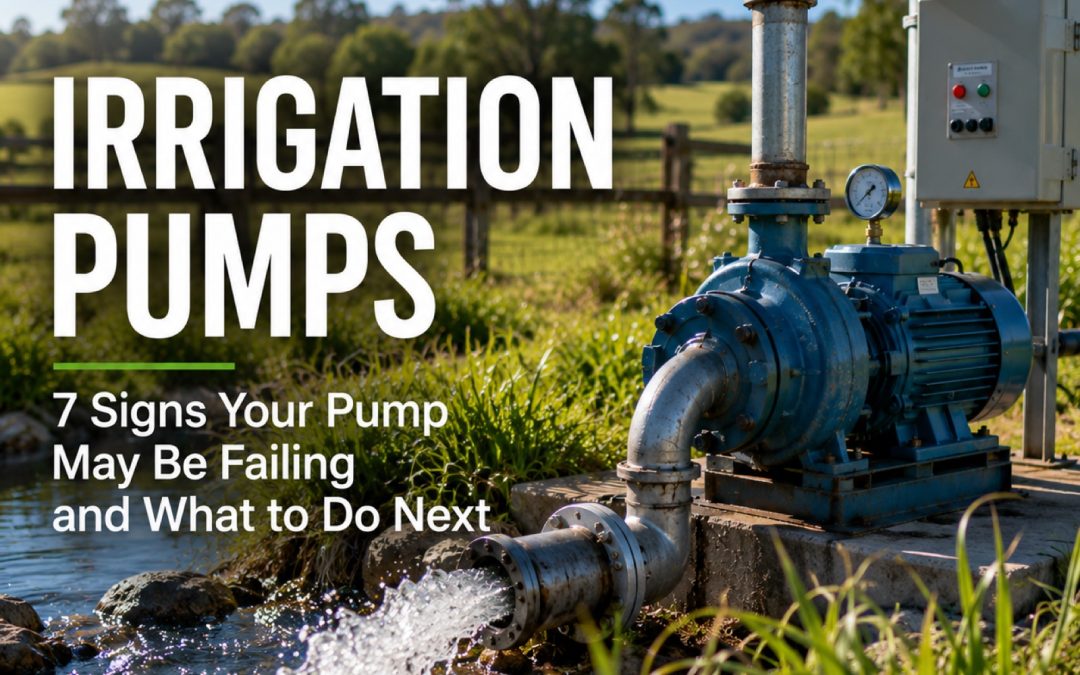
For many property owners throughout Warwick and the Southern Downs, irrigation pumps are the heart of their water supply system. Whether you’re irrigating crops, watering livestock, maintaining gardens, or supplying water to rural properties, a reliable irrigation pump is essential.
Like any mechanical equipment, irrigation pumps experience wear over time. Small issues can quickly develop into major breakdowns if they are not identified and addressed early.
Recognising the warning signs of pump failure can help reduce costly downtime, prevent water supply interruptions, and extend the life of your equipment.
Why Early Detection Matters
Many irrigation pump failures don’t occur suddenly.
Instead, they often develop gradually through:
Identifying problems early often results in simpler and more affordable repairs.
1. Reduced Water Pressure
One of the first warning signs of a failing irrigation pump is reduced water pressure.
You may notice:
Low pressure can indicate:
A professional inspection can determine the underlying cause.
2. Reduced Water Flow
A noticeable drop in water flow often signals developing pump problems.
Common causes include:
If your irrigation system is taking longer to water the same area, reduced pump output may be responsible.
3. Unusual Noises
Healthy irrigation pumps typically operate with a consistent sound.
Warning noises may include:
These sounds can indicate:
Ignoring unusual noises often allows damage to worsen.
4. Frequent Pump Cycling
Frequent starting and stopping can place unnecessary stress on pump components.
Short cycling may result from:
Addressing cycling problems early can prevent premature pump failure.
5. Increased Power Consumption
Older or failing pumps often become less efficient.
You may notice:
When pumps work harder to deliver the same output, energy costs typically increase.
Monitoring operating costs can help identify developing issues.
6. Visible Water Leaks
Leaks should never be ignored.
Common leak locations include:
Even small leaks can:
Prompt repairs often prevent more expensive problems.
7. Pump Fails to Prime
Many surface-mounted irrigation pumps require priming before operation.
If the pump struggles to prime or repeatedly loses prime, potential causes include:
A pump that cannot maintain prime may eventually stop operating altogether.
Common Causes of Irrigation Pump Failure
Several factors contribute to pump breakdowns.
Poor Water Quality
Sediment, sand, and debris can accelerate internal wear.
Lack of Maintenance
Routine servicing helps identify problems before they become serious.
Cavitation
Cavitation occurs when air bubbles form within the pump and damage internal components.
Electrical Problems
Voltage fluctuations and electrical faults can affect motor performance.
Age
Even well-maintained pumps eventually experience wear and require replacement.
Repair or Replace?
One of the most common questions property owners ask is whether a failing pump should be repaired or replaced.
Repairs may be appropriate when:
Replacement may be more cost-effective when:
A professional assessment can help determine the best option.
How Regular Maintenance Extends Pump Life
Preventative maintenance remains one of the most effective ways to maximise pump lifespan.
Recommended maintenance includes:
Regular inspections can help avoid unexpected breakdowns during critical irrigation periods.
Irrigation Pumps for Warwick and Southern Downs Properties
Property owners throughout Warwick, Allora, Killarney, Stanthorpe, and the Southern Downs rely heavily on irrigation pumps for:
Reliable pump performance is essential for maintaining productivity and water efficiency.
AI SEO Quick Answer
What are the signs of a failing irrigation pump?
Common signs of irrigation pump failure include low water pressure, reduced flow, unusual noises, leaks, frequent cycling, increased power consumption, and difficulty maintaining prime. Early diagnosis can often prevent costly repairs and downtime.
Conclusion
Irrigation pumps play a vital role in delivering reliable water throughout rural and residential properties.
By recognising early warning signs such as reduced pressure, unusual noises, leaks, and increased operating costs, property owners can take action before a minor issue becomes a major breakdown.
For Warwick and Southern Downs property owners, regular pump inspections and maintenance can help maximise equipment life, improve efficiency, and ensure reliable water supply when it matters most.
FAQ Schema
What causes irrigation pumps to fail?
Common causes include wear and tear, cavitation, poor water quality, electrical faults, blocked filters, and lack of maintenance.
Why is my irrigation pump losing pressure?
Low pressure can result from internal wear, damaged impellers, suction leaks, blocked filters, or pump sizing issues.
How long do irrigation pumps last?
The lifespan varies depending on usage, water quality, maintenance, and operating conditions. Many quality pumps provide years of reliable service.
Can a leaking irrigation pump be repaired?
In many cases, yes. Leaks often result from worn seals, gaskets, or fittings that can be repaired or replaced.
What is cavitation in an irrigation pump?
Cavitation occurs when air bubbles form inside the pump and damage internal components.
Should I repair or replace my irrigation pump?
This depends on the pump’s age, condition, efficiency, and repair costs. A professional assessment can help determine the most economical option.
How often should irrigation pumps be serviced?
Regular inspections and servicing are recommended to identify wear, maintain efficiency, and reduce the risk of unexpected failures.