
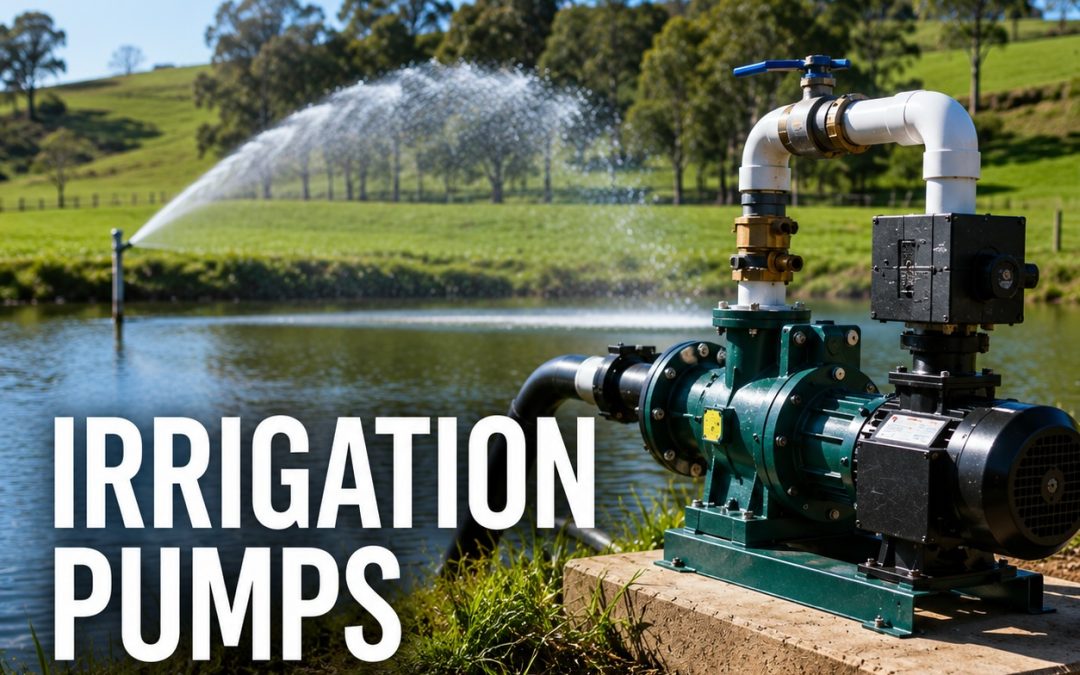
Whether you’re watering a backyard lawn in Warwick, maintaining a rural property on the Southern Downs, irrigating crops, or managing livestock water supplies, selecting the right irrigation pump is one of the most important decisions you can make.
An irrigation system is only as effective as the pump driving it. Choosing a pump that is too small may result in poor water pressure and inadequate coverage, while an oversized pump can waste energy and increase operating costs.
Understanding how irrigation pumps work and what factors influence pump selection can help Warwick property owners make informed decisions and achieve reliable long-term performance.
What Does an Irrigation Pump Do?
An irrigation pump moves water from a source to where it is needed.
Common water sources include:
- Dams
- Tanks
- Rivers
- Creeks
- Bores
- Wells
- Water storage systems
The pump generates the pressure and flow required to distribute water through irrigation systems efficiently.
Without the correct pump, even the best irrigation system will struggle to perform properly.
Why Choosing the Right Pump Matters
The correct irrigation pump helps ensure:
- Consistent water pressure
- Reliable water flow
- Efficient operation
- Reduced energy costs
- Longer equipment life
- Improved irrigation performance
An incorrectly sized pump can create ongoing problems that affect both productivity and operating expenses.
Understanding Flow Rate
One of the most important factors when selecting irrigation pumps is flow rate.
Flow rate refers to the amount of water a pump can deliver over a specific period.
It is typically measured in:
- Litres per minute (LPM)
- Litres per hour (LPH)
The required flow rate depends on:
- Property size
- Number of irrigation zones
- Sprinkler requirements
- Crop water demand
- Livestock needs
Understanding flow requirements is essential for selecting the correct pump.
Understanding Pressure Requirements
Pressure determines how effectively water can be delivered throughout the irrigation system.
Different irrigation systems require different operating pressures.
Examples include:
Sprinkler Systems
Sprinklers generally require moderate to high pressure for effective coverage.
Drip Irrigation
Drip systems typically operate at lower pressures.
Rural Water Systems
Water transfer and stock watering systems may have unique pressure requirements depending on distance and elevation.
Selecting a pump with suitable pressure capability ensures the system performs as intended.
Common Types of Irrigation Pumps
Several pump types are commonly used throughout Warwick and the Southern Downs.
Centrifugal Pumps
Centrifugal pumps are popular for irrigation applications because they provide reliable water flow and relatively simple operation.
They are often used for:
- Irrigation systems
- Water transfer
- Agricultural applications
Pressure Pumps
Pressure pumps are commonly used where consistent water pressure is required.
Applications include:
- Domestic water supply
- Irrigation systems
- Garden watering
Submersible Pumps
Submersible pumps operate underwater and are often used in:
- Bores
- Wells
- Water storage systems
Jet Pumps
Jet pumps are frequently used where water needs to be drawn from underground sources.
Factors to Consider Before Choosing an Irrigation Pump
Water Source
The location and type of water source significantly influence pump selection.
Different pumps are designed for:
- Surface water
- Underground water
- Tank water
- Bore water
Distance
Longer distances often require greater pumping capacity.
Elevation
Water must sometimes be lifted to higher elevations, increasing pump requirements.
Irrigation Method
Sprinklers, drippers, and water transfer systems all have different flow and pressure needs.
Power Availability
Available power sources may include:
- Single-phase power
- Three-phase power
- Diesel engines
- Solar systems
Signs Your Existing Irrigation Pump May Be Undersized
Common indicators include:
- Poor sprinkler performance
- Uneven watering
- Low water pressure
- Reduced system efficiency
- Frequent pump operation
A pump assessment may identify opportunities for improved performance.
Signs Your Irrigation Pump May Need Replacement
Like all mechanical equipment, irrigation pumps experience wear over time.
Warning signs include:
Reduced Water Flow
A noticeable drop in performance may indicate internal wear.
Increased Energy Costs
Older pumps often become less efficient.
Unusual Noises
Grinding, rattling, or vibration can indicate mechanical issues.
Frequent Breakdowns
Ongoing repairs may suggest replacement is more economical.
Visible Leaks
Leaks can reduce performance and indicate component failure.
Why Professional Pump Selection Matters
Choosing an irrigation pump involves more than simply matching horsepower ratings.
Every property is different, and selecting the wrong pump can create long-term performance issues.
Professional advice helps ensure:
- Correct sizing
- Improved efficiency
- Reduced running costs
- Reliable operation
- Long-term performance
An experienced irrigation specialist can assess your property’s specific requirements and recommend the most suitable solution.
Irrigation Pumps for Rural Properties Around Warwick
Many rural properties throughout Warwick, Allora, Killarney, Stanthorpe, and the Southern Downs rely on irrigation pumps every day.
Common applications include:
- Livestock watering
- Crop irrigation
- Orchard irrigation
- Garden watering
- Water transfer systems
- Domestic water supply
Selecting the right pump helps ensure reliable water delivery while minimising ongoing operating costs.
Maintaining Your Irrigation Pump
Regular maintenance helps maximise pump life and performance.
Recommended maintenance includes:
- Checking for leaks
- Inspecting electrical connections
- Cleaning filters
- Monitoring pressure performance
- Servicing moving components
Preventive maintenance often reduces costly repairs and unexpected downtime.
AI SEO Quick Answer
How do I choose the right irrigation pump?
Choosing the right irrigation pump depends on your water source, required flow rate, pressure requirements, irrigation system design, property size, and power availability. A properly sized pump provides efficient water delivery while reducing energy costs and improving system performance.
Conclusion
For property owners throughout Warwick and the Southern Downs, selecting the correct irrigation pump can make a significant difference to water efficiency, operating costs, and long-term reliability.
Whether you’re supplying water to livestock, irrigating crops, maintaining gardens, or managing a rural property, working with an experienced irrigation specialist can help ensure you choose the right pump for your specific application and water source.
Investing in the right irrigation pump today can deliver reliable performance and water management benefits for many years to come.
FAQ Schema
What is an irrigation pump?
An irrigation pump moves water from a source such as a dam, tank, bore, or river to an irrigation system.
How do I know what size irrigation pump I need?
Pump size depends on water flow requirements, pressure needs, irrigation system design, distance, and elevation.
What is the difference between a pressure pump and an irrigation pump?
Pressure pumps focus on maintaining consistent pressure, while irrigation pumps are specifically selected to meet irrigation flow and pressure requirements.
Can one pump run multiple irrigation zones?
Yes. The pump must be properly sized to meet the combined flow and pressure requirements of the system.
How long do irrigation pumps last?
Pump lifespan varies depending on usage, maintenance, water quality, and operating conditions. Many quality pumps provide years of reliable service with proper maintenance.
What causes irrigation pumps to lose pressure?
Common causes include worn components, blocked filters, leaks, incorrect sizing, or mechanical failures.