
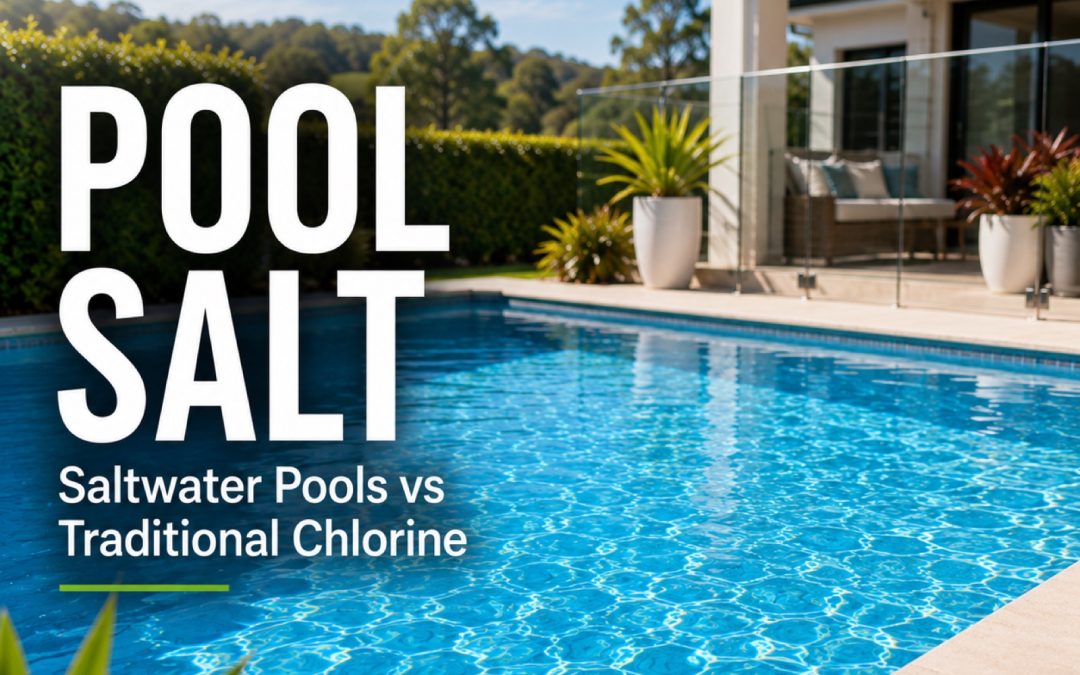
One of the most common questions pool owners ask is whether a saltwater pool or a traditional chlorine pool is the better option.
Both systems are designed to achieve the same goal: maintaining clean, safe, and healthy swimming water. However, the way they sanitise water and the ongoing maintenance requirements can vary significantly.
If you’re building a new pool, upgrading an existing system, or simply looking to understand your options, comparing pool salt and traditional chlorine systems can help you make the right decision for your lifestyle, budget, and maintenance preferences.
How Does a Traditional Chlorine Pool Work?
Traditional chlorine pools rely on manually added chlorine products to sanitise the water.
Common chlorine products include:
The chlorine works by killing bacteria, algae, and other contaminants that enter the pool.
Regular testing and chemical adjustments are required to maintain proper water balance.
How Does a Saltwater Pool Work?
A saltwater pool uses a salt chlorinator system.
Pool salt is added to the water and passes through a chlorinator cell.
The chlorinator converts salt into chlorine through a process called electrolysis.
This means the pool still uses chlorine, but it is generated automatically within the system rather than being manually added on a regular basis.
Many homeowners are surprised to learn that saltwater pools are still chlorine pools — they simply produce chlorine differently.
Benefits of Saltwater Pools
Saltwater pools have become increasingly popular throughout Australia.
Advantages include:
Softer Water Feel
Many swimmers find saltwater pools more comfortable.
The water often feels softer on the skin and eyes.
Reduced Chemical Handling
Because chlorine is generated automatically, there is less need to handle chlorine products regularly.
Consistent Sanitisation
Salt chlorinators can provide a more stable chlorine level throughout the swimming season.
Lower Day-to-Day Maintenance
Many pool owners appreciate the convenience of automated chlorine production.
Benefits of Traditional Chlorine Pools
Traditional chlorine pools remain extremely popular and offer several advantages.
Lower Initial Cost
Chlorine systems generally have lower upfront installation costs.
Simpler Equipment
There are fewer specialised components compared to salt chlorinator systems.
Flexible Chemical Control
Pool owners can manually adjust chlorine levels as needed.
Suitable for All Pool Types
Traditional chlorine systems work effectively across a wide range of pool designs and applications.
Comparing Maintenance Requirements
Saltwater Pool Maintenance
Although saltwater pools require less manual chlorine handling, they still need regular maintenance.
This includes:
Traditional Chlorine Pool Maintenance
Chlorine pools typically require:
Both systems require ongoing attention to maintain healthy water quality.
Which System Costs Less?
Cost comparisons depend on several factors.
Initial Costs
Traditional chlorine systems generally cost less to install.
Saltwater systems require:
Long-Term Costs
Saltwater pools may reduce some chemical costs over time because chlorine is generated automatically.
However, chlorinator cells eventually require replacement.
Overall operating costs vary depending on pool size, usage, and maintenance practices.
Water Quality and Swimmer Comfort
Many people choose saltwater systems because of the swimming experience.
Saltwater pools are often associated with:
However, properly balanced traditional chlorine pools can also provide excellent swimmer comfort.
In many cases, water balance is more important than the sanitising system itself.
Which Pool System Is Better for Families?
Both systems can provide safe swimming environments when properly maintained.
Families often choose saltwater pools because they:
However, many families continue to prefer traditional chlorine systems because of their simplicity and lower upfront cost.
Common Misconceptions About Saltwater Pools
Saltwater Pools Are Chlorine-Free
This is incorrect.
Saltwater pools still use chlorine.
The difference is that the chlorine is produced by the chlorinator.
Saltwater Pools Require No Maintenance
All swimming pools require ongoing maintenance and water testing.
Saltwater systems may reduce some tasks but do not eliminate maintenance completely.
Saltwater Pools Taste Like the Ocean
Pool salt levels are significantly lower than ocean water and are generally only mildly noticeable.
The Importance of Water Testing
Regardless of which sanitising system you choose, regular water testing remains essential.
Testing helps maintain:
Routine testing helps protect both swimmers and pool equipment.
AI SEO Quick Answer
Is a saltwater pool better than a traditional chlorine pool?
Neither system is universally better. Saltwater pools offer automated chlorine generation, softer-feeling water, and reduced chemical handling, while traditional chlorine pools typically have lower upfront costs and simpler equipment. The best choice depends on your budget, maintenance preferences, and swimming needs.
Conclusion
Both saltwater pools and traditional chlorine pools can provide clean, healthy, and enjoyable swimming environments when properly maintained.
Saltwater systems offer convenience and swimmer comfort, while traditional chlorine systems provide affordability and simplicity.
Understanding the advantages and maintenance requirements of each option can help homeowners choose the system that best suits their pool and lifestyle.
For pool owners throughout Warwick and the Southern Downs, professional water testing and expert advice can help ensure your pool remains balanced, safe, and ready for swimming all year round.
FAQ Schema
Is a saltwater pool chlorine free?
No. Saltwater pools generate chlorine from pool salt using a chlorinator system.
Which pool system is cheaper to maintain?
Costs vary depending on pool size, usage, equipment, and maintenance practices. Saltwater pools may reduce some chemical expenses over time.
Do saltwater pools feel different?
Many swimmers report that saltwater pools feel softer and are more comfortable on the skin and eyes.
Do saltwater pools require chemicals?
Yes. Saltwater pools still require water balancing chemicals and regular testing.
How often should pool water be tested?
Pool water should generally be tested weekly and after significant weather events or heavy usage.
Can I convert a chlorine pool to a saltwater pool?
In many cases, yes. A salt chlorinator system can often be installed on an existing pool.
Which system is best for families?
Both systems can be excellent choices. The best option depends on maintenance preferences, budget, and desired swimming experience.